The Conveyancing Process in South Africa: Roles, Timeline and Costs
Quick answer: Conveyancing is the legal process of transferring registered property ownership from seller to buyer through South Africa's Deeds Office, handled by a conveyancer, an admitted attorney who has passed the Legal Practice Council's conveyancing exam. It typically takes 6–10 weeks, and the buyer usually pays the fees even though the seller appoints the attorney.
Almost every property sale in South Africa goes through conveyancing, but few buyers or sellers know exactly what it involves beyond "the attorney's part." Who actually appoints that attorney, why does a bond need its own separate one, and is a conveyancer even the same thing as a lawyer? This guide answers all three, walks through the process in the order it actually happens, and explains what to check before trusting a firm with your transfer. For the full Rand breakdown of what you'll pay, see our Transfer Costs Explained guide, or use the Transfer Cost Calculator to get your own figure first.
In this article
- What is conveyancing, and what does a conveyancer do?
- Is a conveyancer an attorney?
- Who's who: transferring attorney vs bond attorney vs bond cancellation attorney
- How long conveyancing takes
- What conveyancing actually costs
- Who appoints the conveyancer, and can you choose your own?
- How to choose a good conveyancer
- Frequently asked questions
What Is Conveyancing, and What Does a Conveyancer Do?
Conveyancing is the legal process of transferring registered ownership of an immovable property from a seller to a buyer, administered through South Africa's Deeds Registry system. It covers the property itself changing hands and, where a bond is involved, the registration of a new bond and, on the seller's side, the cancellation of any existing one.
A conveyancer, the attorney who runs this process, does considerably more than file paperwork. They investigate the property's title to confirm the seller can actually transfer it, prepare and lodge every document the Deeds Office requires, obtain the rates clearance and levy clearance certificates confirming nothing is owed to the municipality or body corporate, hold the purchase price in a trust account, and only release funds once registration is confirmed. Most buyers only deal with the conveyancer directly on signature day, but almost every fee, delay and document request in a property sale traces back to this office.
Is a Conveyancer an Attorney?
Yes. A conveyancer is not a separate profession in South Africa, unlike in some other countries, it's an admitted attorney who has passed the Legal Practice Council's conveyancing examination under Section 26 of the Legal Practice Act 28 of 2014, then been formally enrolled as a conveyancer at a Provincial Division of the High Court.
That extra qualification is specifically about deed drafting, registry practice, the Deeds Registries Act and the mechanics of transfer, bond registration and cancellation, on top of an attorney's general legal training. It matters practically: not every attorney is entitled to sign off a property transfer, only ones who have specifically qualified and enrolled as conveyancers can. If you're ever unsure whether a firm handling your transfer is properly qualified, this is the exact credential to ask about.
Who's Who: Transferring Attorney vs Bond Attorney vs Bond Cancellation Attorney
A single property sale routinely involves three separate law firms, each appointed by a different party and doing a distinct job. Assuming any one of them represents you personally, or that they're all the same office, is one of the most common sources of confusion buyers and sellers report during a transfer.
| Attorney | What They Do | Appointed By | Paid By |
|---|---|---|---|
| Transferring attorney (conveyancer) | Handles the actual change of ownership: title, documents, lodgement, registration | Seller | Buyer |
| Bond attorney | Registers the buyer's new bond over the property | Buyer's bank | Buyer |
| Bond cancellation attorney | Cancels the seller's existing bond so the property can transfer unencumbered | Seller's bank | Seller |
All three work in parallel, not in sequence, so that the property transfer and any bond registration or cancellation register simultaneously at the Deeds Office. A delay by any one of the three can hold up all of them, since none can finalise ahead of the others.
See exactly what a delayed transfer costs you in fees while these three attorneys work in parallel.
Calculate Transfer Costs →How Long Conveyancing Takes
A straightforward residential conveyancing process typically takes 6 to 10 weeks from a signed offer to purchase to registration, the same range our own Transfer Costs Explained guide sets out for the full transfer journey. Some industry estimates go as high as 8 to 12 weeks, particularly for more complex transactions such as a deceased estate, a sectional title unit with a levy dispute, or a chain where your buyer is also waiting on their own sale to complete.
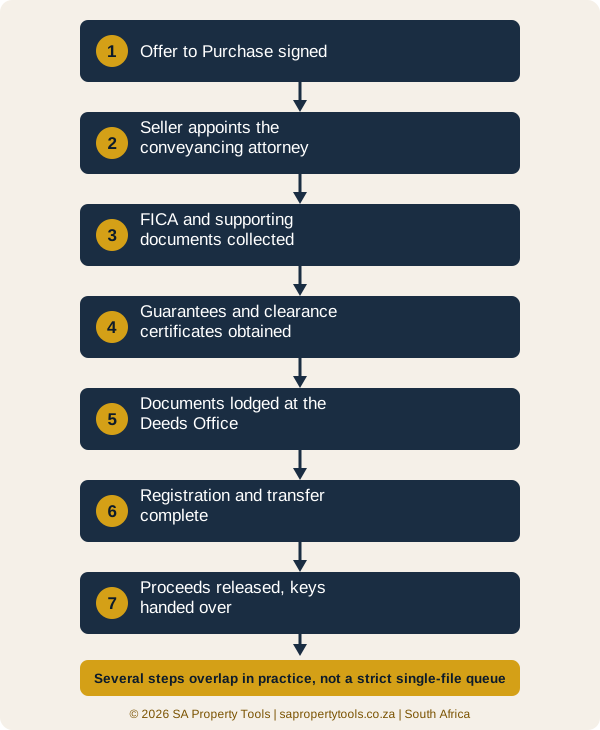
These stages aren't a strict single-file queue. FICA and document collection often overlaps with the attorney appointment, and clearance certificates can be requested while other paperwork is still being finalised. The most common causes of a longer wait are incomplete FICA documentation, a municipality slow to issue a rates clearance certificate, or the seller's bond cancellation attorney taking longer than expected.
What Conveyancing Actually Costs
Conveyancing fees are not fixed by law. The Law Society of South Africa publishes a voluntary fee guideline that scales with the property's purchase price, and firms are free to charge less or more. As a buyer, expect to pay the transferring attorney's conveyancing fee, transfer duty if the price is above the SARS threshold, and a separate bond registration fee if you're taking a bond, on top of disbursements like the Deeds Office fee and clearance certificates.
We've already built the full Rand-figure breakdown, so rather than repeat it here: see our Transfer Costs Explained guide for a complete cost table by price band, or use the calculator below to get your own number in under a minute.
Get a full, itemised estimate of your conveyancing and transfer costs based on your actual purchase price.
Use the Transfer Cost Calculator →Who Appoints the Conveyancer, and Can You Choose Your Own?
Here's the part that catches almost everyone off guard: the seller appoints the conveyancing attorney, not the buyer, even though the buyer is the one paying their fees. This is standard, lawful practice in South Africa, not a red flag or something to dispute on principle.
In practice it's often negotiable at the margins. Estate agents sometimes build a preferred attorney into the offer to purchase, and nothing stops a buyer from raising a preference during negotiation, though the seller isn't obligated to agree. If a transaction is already underway and there's a genuine service problem, real delays, poor communication, unresponsiveness, there is a recognised process for requesting a change of conveyancer, though it isn't automatic and generally needs both parties' cooperation to action smoothly.
How to Choose a Good Conveyancer
Since you're rarely the one appointing the conveyancer, "choosing" one is less about shopping around and more about knowing what to check once a firm is proposed, whether you're the seller doing the appointing or the buyer trying to gauge who you're dealing with.
What to check before trusting a firm with your transfer
- Confirm they're a properly enrolled conveyancer, not just any attorney, by asking directly or checking with the Legal Practice Council or your provincial Law Society
- Get a written, itemised fee quote before signing, not just a verbal estimate
- Ask how many active files their office is handling; an overloaded conveyancer is a common, avoidable cause of delay
- Ask for a realistic timeline estimate specific to your transaction, not just the generic 6–10 week range
- Confirm who your direct point of contact will be for updates; many delays go unnoticed simply because nobody is checking in
Wondering whether you'll need short-term finance while your transfer is registering? Read our guide to bridging finance for property in SA →
Frequently Asked Questions
Conveyancing is the legal process of transferring registered ownership of a property from a seller to a buyer through South Africa's Deeds Office. A conveyancer handles this on your behalf: they investigate the property's title, prepare and lodge all the transfer documents, settle outstanding rates and levies, obtain the guarantees and clearance certificates the Deeds Office requires, and register the new owner once everything checks out. They also hold the purchase price in trust until registration is confirmed, only releasing it to the seller once the buyer is the registered owner.
Yes. A conveyancer is not a separate profession in South Africa, it's an admitted attorney who has gone a step further. To practise as a conveyancer, an attorney must pass the Legal Practice Council's conveyancing examination under Section 26 of the Legal Practice Act 28 of 2014, then be formally enrolled as a conveyancer at a Provincial Division of the High Court. That extra qualification is specifically about deed drafting, registry practice and the mechanics of transfer, bond registration and cancellation, on top of their general legal training.
The seller has the legal right to appoint the conveyancing (transferring) attorney, even though the buyer is the one who ends up paying their fees. This surprises a lot of buyers. In practice the appointment is sometimes negotiated as part of the offer to purchase, and there is a recognised process for changing conveyancers mid-transaction if there's a genuine service problem, but you cannot simply insist on using your own attorney the way you might for a bond attorney, which is appointed by your bank instead.
They're three separate law firms doing three separate jobs on the same transaction, and it's common to conflate them. The transferring attorney (conveyancer) handles the actual change of ownership and is appointed by the seller. The bond attorney registers the buyer's new bond and is appointed by the buyer's bank. The bond cancellation attorney cancels the seller's existing bond and is appointed by the seller's bank. All three work in parallel so that transfer and bond registration happen simultaneously at the Deeds Office.
A straightforward residential conveyancing process in South Africa typically takes 6 to 10 weeks from a signed offer to purchase to registration, covering bond approval, document preparation, transfer duty payment and Deeds Office registration. Some industry estimates run as high as 8 to 12 weeks for more complex transactions, such as a deceased estate or a sectional title scheme with outstanding levies. FICA delays, an incomplete rates clearance or a slow bond cancellation are the most common causes of a longer wait.
Conveyancing fees are guided by the Law Society's voluntary fee guideline rather than fixed by law, and typically run into the tens of thousands of Rand depending on the purchase price. The buyer pays the transferring attorney's conveyancing fees as well as the bond attorney's fees for registering their new bond, while the seller pays the bond cancellation attorney and the estate agent's commission. For a full Rand breakdown at different price points, see our Transfer Costs Explained guide or use the Transfer Cost Calculator.
The buyer's side is almost always the bigger bill. A buyer pays the transferring attorney's conveyancing fee, transfer duty on properties above the SARS threshold and, if they're taking a bond, a separate bond registration fee, all of which scale with the purchase price. A seller's direct conveyancing-related cost is usually limited to the smaller bond cancellation attorney fee, since the transferring attorney's fee itself falls to the buyer. Estate agent commission, which the seller pays separately, is often the seller's largest cost overall.
There isn't one official, universally used five stages framework in South Africa. Different attorneys and guides break the same process into anywhere from five to twelve steps depending on how granular they get. In practice it runs through the same core phases regardless of how they're counted: the offer to purchase is signed, the conveyancer is appointed and instructed, FICA and supporting documents are gathered, guarantees and clearance certificates are obtained, and the documents are lodged and registered at the Deeds Office.